Most artificial turf that fails does not fail on the surface. It fails in the few inches below it, in decisions a homeowner never sees and a contractor rarely volunteers. This article walks through the most common of those decisions — a layer of weed fabric in the wrong place — then the three other buried faults that produce the same result, how each one reports itself months later, and the questions that catch all four before anyone breaks ground in Phoenix.
The Mistake: Weed Fabric Directly Under the Backing
Standard needle-punched weed fabric looks and behaves exactly like a felt pad. Laid directly under the turf backing, it absorbs urine, traps moisture against the underside of the grass and holds a concentrated ammonia smell that no garden hose can wash out. The fabric itself is not the fault. The placement is. A top-placed fabric is a permanent urine sponge sitting millimeters below the surface, and it keeps a yard smelling long after the smell of the last visit should have gone.
It is also the one fault that is easy to ask about and hard to fix later, because correcting it means lifting the turf off a base that was built around it.
Where the Fabric Actually Belongs
Non-woven geotextile is a high-flow soil separator, and its job is at the very bottom of the excavation, beneath the compacted stone base. There it does the opposite of a felt pad: it lets water and urine pass freely downward while stopping native clay, silt and fines from migrating up into the clean drainage stone, which is what would eventually clog the voids the base depends on.
The placement rule is a sentence you can put into a contract: bottom only, never directly under the turf backing. Ask the question and listen to the answer, not the sales pitch around it. An installer who says the fabric belongs under the grass has just told you how the whole base will be built.
The Other Three Buried Faults
Fabric is the loudest mistake, but not the only one that produces a yard that smells, sinks or wrinkles.
- Rounded pea gravel. Rounded stones cannot lock together. They roll and shift like a bed of marbles under paws, feet and furniture, so the turf above slips, buckles, wrinkles and eventually sinks. The base has to be clean, washed, angular crushed stone.
- A base compacted in one pass. Dumping the full depth of stone and running a roller over it leaves the bottom loose. The correct process is damp, 2-inch lifts with a plate compactor to a target of 95% Standard Proctor density, which is what turns a pile of gravel into a base that behaves like a rigid slab.
- A base that is too thin. A light residential lawn may sit on a 2- to 3-inch base. A yard with active dogs needs a minimum 4-inch compacted depth, and heavy clay can call for more, because a shallow base cannot take repeated flushing and high-traffic use without settling unevenly.
How a Bad Base Reports Itself Later
None of these faults announces itself on handover day. They surface later, in a fairly consistent order: standing water and soft spots after rain, then wrinkles and seams creeping apart as the subgrade settles, then weeds pushing through from below, then fading turf with matted infill.
Repairs follow a ladder. Minor cases may only need sealing or resurfacing, moderate damage may need section replacement or leveling, and severe structural problems usually mean full replacement with the site prepared properly the second time. When the base itself is wrong, patching the surface is money spent twice.
Five Questions to Ask Before the First Shovel
Every buried fault has a question that exposes it. Where exactly in the base layers does the weed barrier go? Which aggregate is specified — open-graded angular stone or a dense-graded base? How deep will you excavate? How is the base compacted, to what density, and how is that verified? and Is every one of those specifications written into the contract with the material names?
A confident, specific answer to all five is the shortest evidence that you are talking to a crew that has built this system before. Hesitation on any one of them is the cheapest warning you will ever get.
Where This Leaves a Homeowner
The point of the list is not to turn a homeowner into an installer. It is to make the invisible part of the quote visible, because the base is the part that decides whether the yard still looks and smells right in year five. Phoenix Artificial Turf is an independent matching service, not a contractor. We do not install, repair, inspect or warranty artificial turf. We match homeowners in Phoenix and across the Valley of the Sun with local providers — up to 3 matches, within one business day, and 100% free.
Frequently asked questions
Where should weed fabric go under artificial turf?
At the very bottom of the excavation, underneath the compacted stone base, where it acts as a soil separator. It should never be placed directly under the turf backing.
Why does fabric under the turf hold in odors?
Needle-punched fabric behaves like a felt pad. In that position it absorbs urine, traps moisture against the backing and locks in a permanent ammonia smell that rinsing cannot remove.
Is pea gravel ever acceptable under artificial turf?
No. Rounded stones cannot lock or compact, so they roll and shift under traffic and the turf above them buckles, wrinkles and sinks. The base should be clean, washed, angular crushed stone.
How deep should the base be?
A minimum 4-inch compacted depth for a yard with dogs, and 2 to 3 inches for a light residential lawn with no pets. Heavy clay can call for more, because a shallow base cannot handle repeated flushing.
Can bad base work be repaired without replacing the yard?
Sometimes. Minor drainage issues may only need sealing or resurfacing, moderate damage may need section replacement or leveling, and severe structural problems usually require full replacement with the site prepared correctly.
Sources
- USDA-NRCS Web Soil Survey (native soil, drainage class and depth to water table for a parcel)
- USDA-NRCS Official Soil Series Descriptions (clay and hardpan layers that slow drainage)
- National Weather Service — local climate pages and station records (rainfall intensity)
Related
Artificial Turf services in Phoenix
Phoenix Artificial Turf Residential Turf
A residential turf installation is a drainage and sub-base project that ends in a lawn, and the published numbers only make sense once you know which of the two you are paying for.

Phoenix Artificial Turf Pet Turf
Pet turf is judged by what happens underneath it, not by how the blades look, and the published specification is a deeper, fully draining base plus an infill that changes the chemistry of the yard.
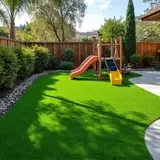
Phoenix Artificial Turf Playground Turf
A playground surface is bought for one number - the fall height it is rated to - and everything else about the installation serves that number.
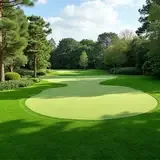
Phoenix Artificial Turf Putting Greens
A backyard putting green is a shaped base with a surface stretched over it, and the published specification starts with the speed number the surface has to deliver.
Phoenix Artificial Turf Commercial Turf
Commercial turf is published as a high-traffic, high-drainage surface, and the two numbers that decide whether it works are the annual hours it is rated for and how fast the base sheds water.
Areas we serve
Phoenix
Artificial Turf in Phoenix, AZ - costs, water and soil notes.
Scottsdale
Artificial Turf in Scottsdale, AZ - costs, water and soil notes.
Chandler
Artificial Turf in Chandler, AZ - costs, water and soil notes.
Gilbert
Artificial Turf in Gilbert, AZ - costs, water and soil notes.
Mesa
Artificial Turf in Mesa, AZ - costs, water and soil notes.
Tempe
Artificial Turf in Tempe, AZ - costs, water and soil notes.
Glendale
Artificial Turf in Glendale, AZ - costs, water and soil notes.